
CReality Ender 3 V3 SE 3D Printer With CR Touch Auto Leveling
A FDM 3d printer (250 mm/s), a versatile choice for everyday printing.
Multi-colour 3D printing brings prints to life with several filaments in one model. Here's how multi-material systems work and which to choose.
Multi-colour printing uses a multi-material system that feeds several filaments to one FDM printer, switching between them during a print. Look at how many colours it supports, the filament waste per switch, and whether it's built-in or an add-on. It's brilliant for colourful models - at the cost of longer prints and some wasted filament.
A multi-material unit holds several filament spools and feeds the right colour to the hotend as the print progresses, purging the old colour at each change. The result is genuine multi-colour models without hand-painting. The trade-offs are longer print times and purged (wasted) filament at each colour change, plus a higher upfront cost.
If you print models, signage, toys or anything where colour matters, a multi-material system is genuinely fun and capable. If you mostly print functional single-colour parts, it adds cost, waste and complexity you won't use. Many makers buy a great single-colour printer first and add multi-material later if they find they want it.
A FDM 3d printer (250 mm/s), a versatile choice for everyday printing.

A FDM 3d printer (255 x 255 x 260 mm, 600 mm/s), a versatile choice for everyday printing.

A FDM 3d printer (220 x 220 x 220 mm, 600 mm/s), a versatile choice for everyday printing.

A FDM 3d printer (270 x 270 x 256 mm, 600 mm/s), a versatile choice for everyday printing.

A FDM 3d printer (220 x 220 x 220 mm, 600 mm/s), a versatile choice for everyday printing.

A FDM 3d printer, a versatile choice for everyday printing.
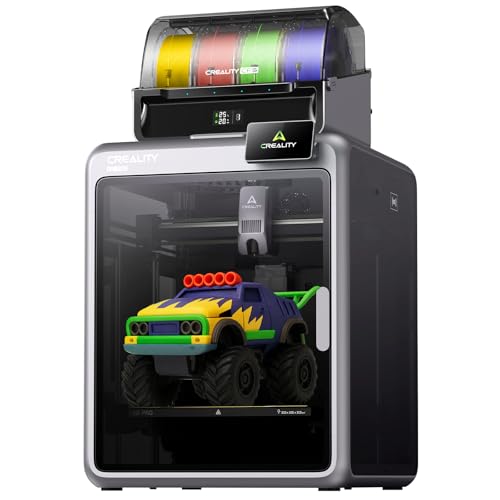
A FDM 3d printer (300 x 300 x 300 mm, 600 mm/s), a versatile choice for everyday printing.

A FDM 3d printer (256 x 256 x 256 mm, 500 mm/s), a versatile choice for everyday printing.

A FDM 3d printer (245 x 245 x 240 mm, 600 mm/s), a versatile choice for everyday printing.

A FDM 3d printer (350 x 350 x 350 mm, 600 mm/s), a versatile choice for everyday printing.
A multi-material system feeds several filaments to one FDM printer and switches colours during the print, purging the old colour at each change. You get true multi-colour models without hand-painting.
For colourful models, toys and signage, yes - it's capable and fun. For functional single-colour parts it adds cost, filament waste and print time you may not need.
Yes - each colour change purges some filament, and prints take longer. It's the main trade-off for multi-colour capability.
Our top pick is the CReality Ender 3 V3 SE 3D Printer With CR Touch Auto Leveling (our score 8.8/10) - A FDM 3d printer (250 mm/s), a versatile choice for everyday printing..